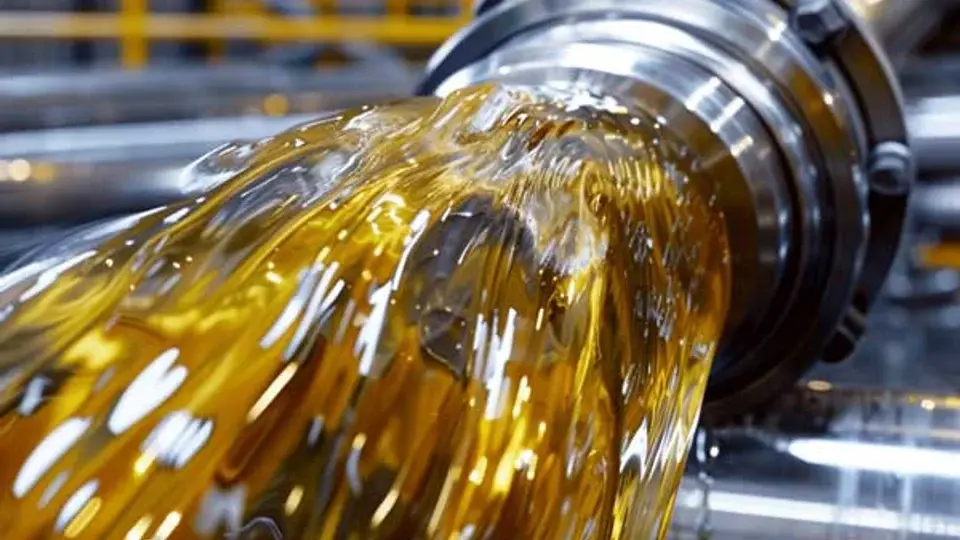
“The brochure says the pump can lift from that depth. Why will it not pick up our product?” Before comparing the installation with the brochure, ask what the published number describes. Was the pump wetted or prefilled? What liquid, temperature, speed, and suction line were used?
There are two questions to answer: can the pump establish liquid flow from the starting condition, and can it then maintain the required flow? A successful prime does not answer the second question. With a viscous liquid, both need checking for the actual installation.
1. Find Out What the Published Lift Describes
Ask for the conditions behind the figure rather than assuming every manufacturer uses the same test. Confirm the model, fitted components, liquid properties, pump speed, pipe length and inside diameter, and the initial condition of the pump and line. Ask whether the figure describes priming from an unfilled line or operation after flow has already been established.
Measure vertical lift from the supply liquid surface to the pump inlet reference used for the selection. Use the lowest expected operating level, not the tank rim or the level when the tank is full. Give the supplier the tank pressure as well: an open tank and a closed vessel cannot simply be treated as the same inlet condition.
2. Separate Vertical Lift from Suction-Line Losses
Vertical lift is only one part of the inlet calculation. The liquid also passes through the full pipe or hose route, including horizontal sections, bends, valves, and strainers. Give the actual inside diameter and each section’s length. A hose described by its connection size alone may leave the flow passage unclear.
Line losses depend on flow, geometry, and liquid properties. Supply viscosity data with its temperature and, where relevant, the measurement method or shear conditions. Describe any settling or change after standing. Do not assume that a warm sample represents the material left in the suction line overnight.
3. Describe the First Start and the Restart Separately
Tell the supplier whether the pump and suction line are empty, partly filled, or full before each start. Note whether the line drains during shutdown and whether a check or foot valve is fitted. A first start after installation may differ from a restart after a short stop or a cold weekend shutdown.
Keep possible inlet problems separate in the description. Air may enter through a leaking connection; gas may remain at a high point; a hose may deform and restrict the passage. These are different issues to investigate. Record the symptom and timing without labeling an unstable flow or a single vacuum reading as proof of one cause.
4. Send the Layout and Starting Conditions
A marked-up sketch is a useful start. Show the pump inlet elevation, lowest supply level, vessel pressure or whether it is open to atmosphere, and the complete suction route. Add pipe or hose inside diameters, section lengths, high points, valves, strainers, and reducers. Photos can explain details that are hard to capture in the sketch.
Include the required flow, liquid description, density and viscosity data with temperature, solids or gas content, and the expected condition after standing. For an existing installation, send any recorded priming time and operating readings, whether the line drains, and any prefill or venting steps already specified in its procedure. Do not change the procedure just to collect data.